Land Cleared Without Hauling or Burning
Forestry Mulching & Brush Clearing in Mechanicsville for properties with overgrowth blocking pasture use or field access
Mature properties across Hanover County often reach a point where brush, saplings, and volunteer timber overtake open ground that once served as pasture or field space. Failla Land Management clears land using forestry mulching equipment that grinds standing trees, stumps, and brush into ground-level mulch in a single pass, eliminating the need for burning piles or hauling debris offsite. This method reclaims usable acreage while leaving organic material in place to stabilize soil and reduce erosion during the transition back to managed land use.
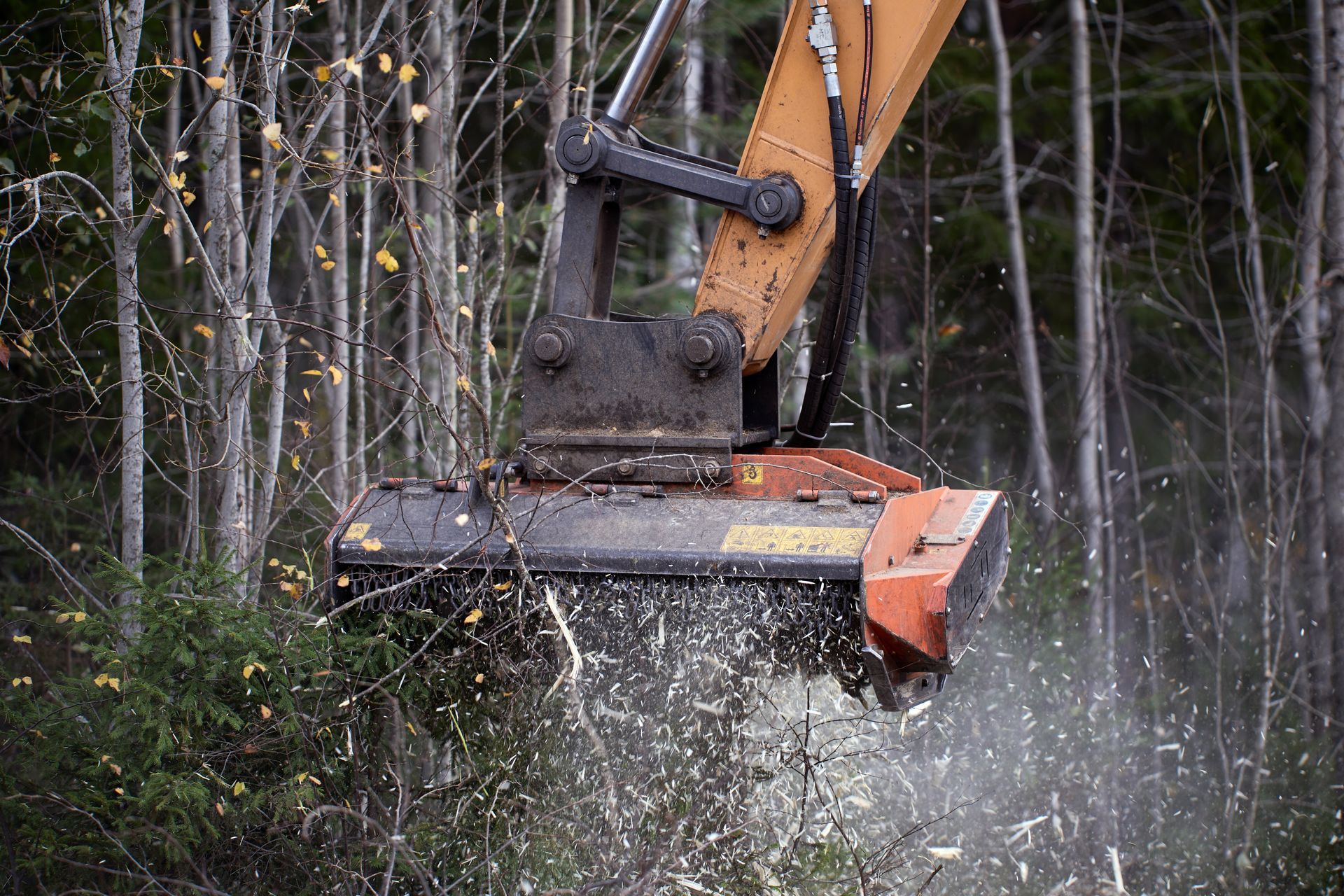
Forestry mulching works by feeding vegetation through a drum or disc head that reduces everything from saplings to mature timber into uniform chips, depositing the processed material directly onto the ground as you watch the equipment advance. The process handles root systems and stumps without separate grinding steps, and the resulting mulch layer prevents immediate regrowth while decomposing into soil over the following seasons. Properties along the Wyatt Wood Road corridor in Mechanicsville and throughout New Kent, King William, and Ashland see this approach used to prepare land for livestock rotation, hay production, or recreational trails without the erosion risk that follows traditional clearing methods.
Schedule a property evaluation to identify which sections of your land require mulching and what equipment access routes will support the work.
What the Ground Looks Like After Mulching
Once the mulching pass finishes, you see a layer of processed wood chips covering the cleared area, typically three to six inches deep depending on the density of vegetation removed. The mulch settles as rain and weather compress it, and within weeks the surface firms enough to walk or drive equipment across without the muddy conditions that follow dozer-based clearing. This layer also suppresses the seedbank in the soil, slowing the return of the brush species that dominated before treatment.
Failla Land Management operates across Central Virginia with availability that responds to project timelines rather than waiting lists that stretch weeks out, a factor that separates mulching contractors when weather windows or construction schedules compress decision time. You notice immediate access to sections of your property that were previously impassable, and the cleared footprint supports follow-on work like fencing installation, pasture seeding, or trail routing without additional grading in most cases.
The mulch layer remains visible for one to two growing seasons before decomposing into the topsoil, and during that period it moderates temperature swings at the soil surface and retains moisture that supports establishment of grasses or cover crops seeded after clearing. Properties using mulched areas for pasture reclamation typically see faster transition to stable footing compared to scraped ground, and the organic matter contribution improves soil structure over time rather than stripping it away..
Questions Before Clearing Your Property
Property owners across Hanover County and the surrounding counties ask similar questions before starting mulching projects, especially when comparing this method to traditional dozer work or manual cutting.
What size trees can forestry mulching equipment handle?
Mulching heads grind trees up to eight inches in diameter in a single pass, and larger timber is often directionally felled and then processed on the ground, allowing the equipment to reduce trunks and limbs without separate removal steps.
How does mulching work on properties with wet or sloped ground?
Equipment weight distributes across tracks or wide tires to prevent rutting, and operators adjust speed and approach angle on slopes to maintain traction while processing vegetation, making the method viable on terrain where wheeled dozers would tear the surface.
When should I schedule mulching to prepare land for pasture use?
Late fall through early spring offers the best ground conditions in Mechanicsville and surrounding areas, as frozen or dry soil supports equipment movement without compaction, and the dormant season limits disruption to wildlife while giving you a full growing season to establish grasses after clearing.
What happens to stumps and root systems during mulching?
The grinding process pulverizes stumps flush with the ground and shreds surface roots into the mulch layer, eliminating the need for separate stump grinding and leaving no obstacles for mowing equipment or livestock movement once the area transitions to pasture.
How much area can be cleared in a day?
Dense brush and sapling growth typically clears at one to three acres per day depending on stem density and equipment access, while open woodland with larger spacing processes faster, and the single-pass nature of mulching means you see finished ground immediately rather than waiting for debris removal.
Failla Land Management brings responsive availability and equipment coverage across Hanover County, New Kent, King William, Chesterfield, and Petersburg to address overgrowth before it limits your property's usable footprint. Request a site visit to review access points and determine which clearing approach fits your land reclamation goals.